


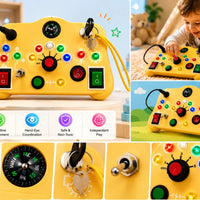
The best quiet-time activity boxes
Pre-made and DIY systems that give a toddler 30 minutes of independent play. Tested across a year with 2 and 4-year-olds.
Pre-made and DIY systems that give a toddler 30 minutes of independent play. Tested across a year with 2 and 4-year-olds.
Quiet time replaces the afternoon nap for many kids between ages 3 and 5. The activity box is the tool that makes 30 to 60 minutes of independent quiet play possible. To find out what nap-and-rest schedule fits your kid, check our wake windows calculator.
Most quiet-time boxes fail for the same reasons. Five features predict success.
Single-task design. Each item in the box should be one thing — a puzzle, a sticker page, a sorting toy. Mixed-purpose toys (lots of buttons, lots of doors) overwhelm in quiet-time context.
No setup required. The kid opens the box and starts playing. Toys that need a parent to assemble defeat the purpose.
Quiet by design. No batteries, no buzz, no music. The point is quiet.
Age-appropriate complexity. A 3-year-old's quiet box looks different from a 5-year-old's. Match age to contents.
A real container. Sturdy box or fabric bin with a lid. Loose toys defeat the curated-rotation system.
A monthly subscription that delivers a themed activity box for kids 5 to 8 (younger options exist as Koala Crate). Each box has one main project, instructions, and all needed materials. Around $20 per month.
The catch: subscription model. You pay monthly. Worth it for one or two kids; gets expensive with siblings.
Quarterly box subscription with developmentally matched toys. The toy quality is heritage-level. Around $80 per quarter.
The catch: most expensive option. Worth it if you have one kid and want the developmental thoughtfulness.
Build it yourself for under $20. Buy a clear bin with a lid. Fill with 6 to 10 single-task toys (puzzles, sticker books, sorting toys, magnetic shapes). Rotate weekly. The unused toys stay in a closet.
The catch: requires you to do the rotation. A 5-minute weekly task. Easy to forget.
Reusable water-coloring books. Refill the brush with water, paint on the special pages, watch colors appear. Around $7 per book. Build a quiet-time box with 5 of these for $35.
The catch: not really a "box system" — just one good quiet-time activity. Pair with puzzles and sticker books for variety.
Quiet time replaces the nap for ages 3 to 5. Our wake windows calculator helps you design the right daily rhythm.
Try the calculatorThe rotation is the system's magic. Toys are exciting again after 3 to 4 weeks out of rotation.
Always include: at least one puzzle (24 to 60 pieces depending on age), one sensory toy (busy board, fidget, putty), one quiet pretend toy (small dollhouse figures, mini cars), one drawing or sticker activity.
Add for variety: a book, a magnetic-doll-dressing set, lacing beads, foam-stickers and a blank notebook, a wind-up music box, color-by-number cards.
Skip: anything with small parts under 1 inch for under-3s, slime/play-doh (needs cleanup), and anything battery-powered.
Quiet time works best when it replaces a nap, not when it replaces TV time. Most kids drop the nap between 3 and 5 but still need 60 minutes of restorative downtime.
The setup:
How do I get my kid to do quiet time? Start small. 10 minutes with a "tickle timer." Build to 30 minutes over a few weeks. Consistency matters more than length.
Can quiet time happen on the couch? Yes if the couch is in a quiet room. Bedroom is the classic choice; living room corner works.
What if my kid won't stay in the room? Use a baby gate as a soft boundary. Or sit nearby reading your own book.
Quiet time vs screen time? Different functions. Quiet time builds independent play and self-regulation. Screen time is consumed, not generated. We use both, but not in the same hour.
How long until it sticks? 2 to 4 weeks of consistent daily quiet time before kids self-initiate. Some kids click in a week. Some take a month.
For more daily-rhythm and rest tools, see our free tools hub.
Ask below and a member of the MiniMinors team will answer. We review every question before it's posted, so the answers here stay accurate and spam-free.